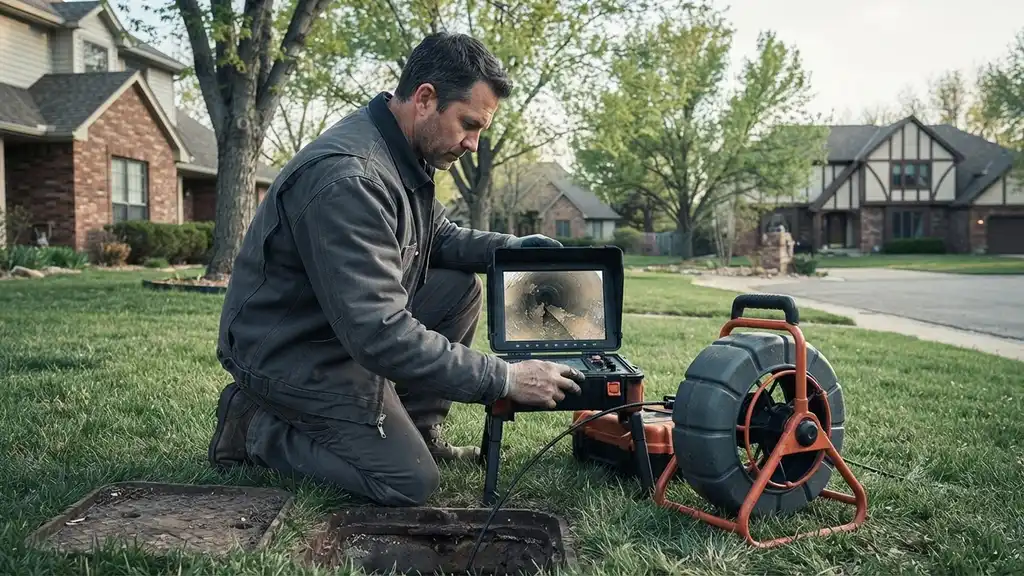
A sewer camera inspection reveals the location and visible condition of the inside of your drain line, including cracks, root intrusion, blockages, separated joints, standing water and signs of collapse. In Meridian, the recorded footage helps us distinguish a simple obstruction from pipe damage that needs repair, so you can make the next decision based on what is actually in the line.
What a Sewer Camera Inspection Reveals About Pipe Damage is a visual plumbing assessment that uses a waterproof camera to identify and document trouble inside a sewer pipe when recurring backups, slow drains or a suspected defect call for a closer look. We explain what the video shows, what it cannot prove by itself, and how findings guide an appropriate repair plan.
If several fixtures gurgle or back up together, the trouble may be in the main line rather than one sink trap. Our team provides Main Sewer Line Repair Meridian ID, using inspection findings to focus the work on the affected section instead of guessing from symptoms alone.
What does a sewer camera inspection reveal about pipe damage?
A sewer camera inspection reveals visible defects and obstructions along the pipe's interior, including their approximate distance from the access point. In Meridian, we use the footage to identify what is blocking flow, whether the pipe wall or joints look damaged, and where follow-up work should be focused.
A flexible cable carries a small camera through an accessible cleanout or drain opening. The live image appears on a monitor, and the inspector records the footage while tracking how much cable has entered the line. A locator can then help mark the camera head's position at ground level, giving us a practical reference for the problem's location.
That record matters. A backup alone does not tell you whether the cause is paper, roots, a sag in the line or a damaged joint. Sewer camera inspection findings Meridian ID homeowners can use should connect the symptom to a visible condition and a location-not simply label every slow drain a broken sewer.
What can a sewer camera detect inside a pipe?
A sewer camera can detect visible roots, cracks, obstructions, displaced joints, corrosion, standing water and some signs of deformation or collapse inside Meridian sewer pipes. The camera shows the pipe's interior surface; it does not automatically establish the pipe's full structural strength or reveal every leak outside the pipe.
These are common sewer pipe video inspection results and what they can mean:
- Tree roots: Fine strands entering at a joint or crack can catch paper and waste. A thicker root mass can narrow the opening and cause repeated backups.
- Cracks and fractures: A line or gap in the pipe wall may let soil or roots enter. The camera helps show the size and position of the visible defect.
- Separated or offset joints: One pipe section sits out of alignment with the next, creating a ledge where debris collects or a gap where roots enter.
- Blockages: Grease, wipes, foreign objects and accumulated debris can obstruct the flow. The image may show the material, though a heavy blockage can hide the pipe behind it.
- Corrosion or surface wear: Older metal pipe may look rough, pitted or scaled inside. The inspection can document the condition without determining the remaining wall thickness.
- Standing water: Water remaining in the line can point to a low section, partial blockage or flow problem that needs closer assessment.
- Deformation or collapse: A pinched, misshapen or obstructed passage can signal serious structural damage. A camera view gives evidence, but the condition and repair choice require interpretation.
A Sewer Line Camera Inspection Meridian ID gives us a way to record the condition before recommending a targeted repair, additional cleaning or replacement. It also gives you a clear visual reference for the discussion.
How we read the footage and locate damage in Meridian
During a sewer scope in Meridian, Idaho, we watch for changes in the pipe's shape, wall, joints and water flow while tracking the camera's distance. We pause at suspicious areas, record the image and relate the camera position to the line's route so the finding is useful beyond the monitor.
We also consider the pipe material and the way different defects appear on camera. A root entering through a joint looks different from a clump of paper in the water. A bright opening can be a normal connection or an offset; its position and shape matter. We compare the image with how water moves through that section rather than interpreting a single still frame in isolation.
Meridian homes have different pipe ages, routes and materials, so no single camera image means the same thing in every property. In parts of Main Sewer Line Repair in Old Town Meridian, an older line's joint condition can be especially relevant; newer construction has its own layouts and access points to consider. We describe the observed defect and its location, then explain what it means for your home.
When we need to establish where the pipe runs or pinpoint a suspected defect outdoors, locating equipment can help translate cable distance into a ground-level mark. That can narrow the area for a repair and help avoid unnecessary digging. The footage and location work together: one shows the interior; the other helps us identify where the pipe sits.
Will a camera find a sewer pipe belly?
A camera can show signs of a sewer pipe belly, especially a stretch where water pools instead of draining away. In Meridian, we assess the length and depth of the standing water and whether debris collects there; the camera shows the symptom, while slope and pipe condition determine the diagnosis.
A belly, also called a sag, is a low section of pipe that holds water. On camera, the lens may enter a stretch where the lower portion remains submerged, and waste can collect in that pool. The camera can show where the water starts and ends, but it does not measure the pipe's exact grade by itself.
We distinguish a possible belly from a temporary pool caused by a blockage or a recently flushed line. Repeated camera passes, observed flow and the condition of the surrounding pipe help clarify the cause. A persistent sag can lead to recurring slow drains or backups because waste repeatedly settles in the same low spot. If that is what the footage indicates, we can explain whether a focused correction or a larger repair is appropriate.
What the footage can-and cannot-tell you about repairs
A sewer video inspection can identify a visible defect and guide repair planning, but it does not alone determine that the entire line needs replacement. In Meridian, we weigh the defect's length, severity, location, pipe material and the condition of nearby sections before recommending a repair scope.
A localized crack or root entry may call for work on one section, while multiple failures, extensive collapse or widespread deterioration can make replacement more practical. A clean-looking section of video is useful evidence, but it does not certify every part of the sewer line: the camera only examines the route it can access and pass through.
When the video points to a broken section, we can discuss Sewer Line Repair for Cracked or Broken Pipes Meridian ID and explain how the visible location shapes the work. If the camera cannot get beyond a severe blockage, we may need to clear the obstruction before we can assess the pipe farther along.
A complete diagnosis often pairs the footage with practical details: whether the line drains after cleaning, whether a defect repeats, and whether the damaged part can be reached for repair. We explain the available options in plain language and provide upfront pricing before work begins. That keeps the decision tied to the condition we found.
Common mistakes when interpreting a sewer scope
The most common sewer scope mistake in Meridian is treating one image-or one symptom-as proof that an entire main sewer line has failed. We read the footage in context, since a camera's view has limits and a visible obstruction can conceal what lies behind it.
Watch out for these misreadings:
- Calling every pool a belly: A blockage can hold water temporarily. We look at the span, water movement and pipe shape before drawing a conclusion.
- Assuming a crack means full replacement: One localized defect does not automatically mean every section is damaged. The extent of deterioration matters.
- Confusing a root mass with the root's entry point: The visible growth may cover the joint or crack where roots entered, so clearing the obstruction may be needed to see the opening clearly.
- Taking "camera reached the end" as a guarantee: The footage only covers the route the camera traversed. A blockage or inaccessible connection may leave part of the system unseen.
- Ignoring recurring symptoms after cleaning: If the line backs up again soon after an obstruction is removed, the underlying pipe shape or damage deserves attention.
Ask what the video directly shows, where the finding is, and whether the camera inspected the full accessible run. A useful explanation separates what we observed from what we infer. That makes it easier to compare cleaning, repair and replacement without paying for work the footage does not support.
When to call a professional in Meridian
Call a Meridian sewer professional when multiple fixtures back up, wastewater returns through a floor drain, or a sewer line keeps clogging after clearing. Those signs can point to a main-line obstruction or damage, and a camera inspection helps us find the cause before selecting the next step.
For a single slow sink, the obstruction may be close to the fixture. But if a toilet bubbles when a nearby tub drains, or several drains slow at once, the shared branch or main line deserves attention. A sewage odor, wet patch along the pipe route, or wastewater backing up inside the home also calls for prompt action.
We can inspect the accessible line, show you the footage and explain the finding without turning a camera image into an automatic replacement recommendation. Sewer Plumbing Pros helps Meridian homeowners connect recurring symptoms to a clear diagnosis and a practical repair plan. If water or sewage is actively backing up, stop using affected fixtures and call for help.
Frequently Asked Questions
What problems can a sewer camera inspection reveal?
A sewer camera can reveal roots, cracks, blockages, offset joints, corrosion, standing water and visible deformation. The footage shows the condition inside the accessible pipe and helps locate a problem. A camera cannot confirm every external leak or assess pipe strength perfectly, so we interpret the image alongside flow and symptoms.
Can a sewer camera show cracks or tree roots?
Yes. A sewer camera can show visible cracks and roots entering through a pipe opening or joint. The view helps us locate the affected area and assess whether roots or debris obstruct flow. A dense blockage may hide the entry point until the line is cleared enough for another inspection pass.
Will a camera inspection find a sewer pipe belly?
A camera can show standing water and debris collecting in a low section, which are common signs of a belly. It does not measure the exact pipe slope on its own. We evaluate the length of the pooled area and observed flow to distinguish a sag from a temporary blockage.
Can video inspection determine whether a sewer line needs replacement?
Video can document visible damage and help us judge whether repair or replacement deserves consideration, but it does not make that decision alone. We assess how widespread and severe the defects are, what material is present and whether the camera inspected the full accessible run.
How long does a sewer camera inspection take in Meridian?
Many accessible sewer camera inspections take about 30-60 minutes in Meridian. Heavy blockage, difficult cleanout access or a long pipe route can extend the visit because we may need more time to advance the camera, record findings or clear an obstruction for a usable view.
Get help with Main Sewer Line Repair in Meridian
If recurring backups or a suspicious sewer scope have you concerned, we can inspect the line, explain what the footage reveals and help you choose a sensible next step. Call Sewer Plumbing Pros at 2085688003 for help with Main Sewer Line Repair in Meridian.